ABSTRACT
-
A key structural characteristic of the Korean medical system is that the public share of total medical expenditure is low, and the provision of medical services relies primarily on the private sector. These structural characteristics emerged within the context of World War II, the end of the war, the Cold War system, and the expansion of global neoliberalism. Even amidst colonialism, authoritarian regimes, and the abuses of development-oriented governments, there were counter-movements that resisted through independence, democratization, and the strengthening of public services. In this process of co-evolution, specific policies related to the healthcare system often became the concrete manifestations of this struggle. The partial achievements attained by civil society and labor movements—such as the establishment of workers’ hospitals, the integration of health insurance, and the prevention of healthcare privatization—were made possible by progress in the broader context of independence and democratization.
Currently, the Korean healthcare system is facing three major crises: (1) constant pressure for privatization and commercialization of healthcare services, (2) sustainability of the healthcare system amid rapid aging, and (3) explosive growth of science and technology driven by artificial intelligence (AI) and the resulting weakening of civil, labor, and social rights.
The outcome of the new crisis currently facing South Korea’s healthcare system will also be determined by the multilayered political dynamics between dominant and countervailing forces at the global, national, and collective levels. The history of co-evolution between politics and the healthcare system that South Korean society has built thus far will provide useful insights not only for Korea but also for other nations facing similar situations in their efforts to establish better healthcare systems.
-
Keywords: South Korea; health politics; healthcare system; political dynamics
초록
-
한국 의료 시스템의 구조적 특징은 전체 의료비 중 공적기여 비중이 낮고, 의료 서비스 제공이 주로 민간 부문에 의존하고 있다는 점이다. 이러한 구조적 특징은 제2차 세계대전과 종전, 냉전체계, 전지구적 신자유주의의 확대라는 자장 하에서, 식민지화, 독재정권, 발전주의적 정권의 전횡 속에서도 독립, 민주화, 공공성 강화로 맞선 대항 세력이 실천들이 존재했다. 이 공진화 과정에서 종종 특정 의료체계 관련 정책들은 이러한 대치의 구체적인 내용이 되기도 했다. 이 과정에서 시민노동사회가 이룬, 노동병원의 설립, 의료보험통합, 의료민영화 저지와 같은 부분적 성과는 독립, 민주화라는 맥락의 진전이 있어 가능했다.
현재 한국 의료 시스템은 (1) 의료 서비스의 민영화 및 상업화에 대한 끊임없는 압박, (2) 급속한 고령화 속에서 의료 시스템의 지속가능성, (3) 인공지능(AI)에 의한 과학 기술의 폭발적인 성장과 그에 따른 시민권, 노동권, 사회권의 약화라는 세 가지 주요 위기에 직면해 있다.
한국 의료체계가 최근 당면하고 있는 새로운 위기가 만들어낼 결과 역시, 지배와 대항 세력의 다층적 정치 동학이 결정할 것이다. 이 과정에서, 정치와 의료 시스템의 공진화 역사는 한국 뿐만 아니라 비슷한 상황에 처한 다른 국가들이 더 나은 의료 시스템을 구축하는 데 유용한 통찰력을 제공할 것이다.
-
Keywords: South Korea; health politics; healthcare system; political dynamics
Introduction
Every country has its own unique healthcare system and its own history of development. Korea is no exception. Although Korea emerged from 35 years of Japanese colonial rule with the end of World War II, it was divided into South and North Korea and fought a war for three years starting in 1950. It had to begin rebuilding from a landscape where the entire country lay in ruins. However, in a short period of time, South Korea achieved rapid growth both politically and economically.
The healthcare sector is no exception to this rapid progress. Life expectancy, a key health indicator, has also risen rapidly from 53.8 years in 1960 to 83.6 years as of 2024 (
World Bank, 2026). In July 1977, the public health insurance system was launched for workplaces with 500 or more employees, and by 1989—a relatively short period of 12 years—a national health insurance system covering the entire population was established.
To understand the characteristics of a country’s healthcare system and how those characteristics came to be, it is essential to understand the political context in which they were formed. This is because political context is a factor just as powerful as economic level in explaining variations in health indicators. This has been empirically confirmed through the study by Navarro et al., which analyzed the cases of advanced capitalist countries; the results showed that countries that maintained social democratic policies for a long period had lower infant mortality rates and higher life expectancy compared to those that adopted conservative or liberal policies (
Navarro et al., 2006).
What are the current characteristics of the South Korean healthcare system? How has it evolved in relation to politics? What are the new challenges facing the Korean healthcare system? Answering these questions requires a diachronic analysis within a consistent analytical framework; however, existing research on the subject is either too outdated (
Kwon & Reich, 2005;
Yang, 1991), limited to specific policies (
Lee, 2003), or confined to descriptive historiography (
Park, 2020).
By answering these questions, this study aims to examine the co-evolutionary process between politics and the healthcare system within the political context and the dynamics between ruling and resistance forces, and further to derive the implications for the politics of health.
Characteristics of the Korean Healthcare System: “A Remote Island”
According to Mark G. Field’s classification of healthcare systems (
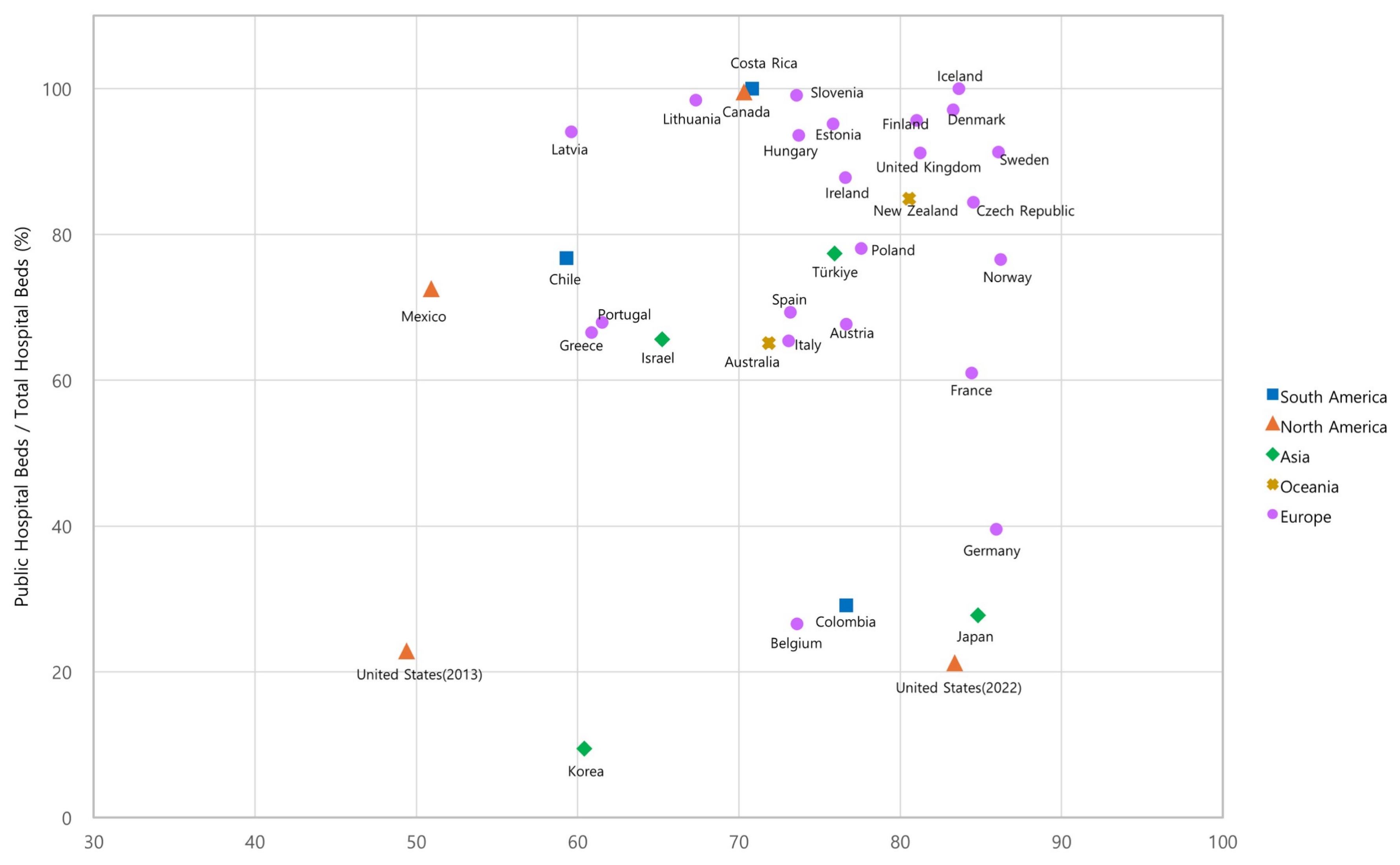
Field, 1973), South Korea has a social insurance-based healthcare system based on a universal health insurance scheme implemented in 1989. The key characteristics of the South Korean healthcare system are best illustrated by plotting the healthcare systems of OECD countries along two axes: the proportion of public contributions in total medical expenditures and the ratio of public hospital beds to total hospital beds.
While in most OECD countries the public share of total medical expenditure exceeds 70% and the proportion of public hospital beds to total beds exceeds 60%, in South Korea these figures stand at 63% and less than 10%, respectively, placing the country’s medical system isolated like a remote island (
Figure 1).
The low public share in total healthcare expenditure is causing various social problems, such as catastrophic healthcare spending (
Lee et al., 2023;
Woo et al., 2018), increased out-of-pocket expenses due to additional private health insurance, and unmet healthcare needs. Furthermore, the private-sector-dominated healthcare delivery system is leading to profit-driven hospital operations.
The Co-evolution of South Korean Politics and the Healthcare System
One way to better understand how the characteristics of South Korea’s healthcare system described above came to be is to examine the process of co-evolution between South Korean politics and the healthcare system.
Japanese Colonial Period (1910–1945)
Korea was under Japanese occupation for 35 years (1910–1945). During this period, the Korean Peninsula served as a logistics base for imperialist Japan’s expansion into the continent and the Pacific War. As the Japanese colonial period overlapped with the era of modernization, Western-style hospitals and medical schools began to emerge in Korea, and various Western-style medical systems were established. The medical system established during this period was formally similar to Japan’s but, in substance, was a colonial medical system imposed on Korea that differed from Japan’s. Fundamentally, its primary purpose was not to protect or promote the health of Koreans; rather, it was a system designed primarily for Japanese residents in Korea and served as a tool for colonial rule.
The nature of Japan’s colonial medical policy at the time is clearly illustrated in the following speech given by Shinpei Goto (後藤新平)—a capable colonial administrator and urban planner who served as the Minister of Civil Affairs of the Government-General of Taiwan and the first president of the South Manchuria Railway Company—to the students of the South Manchuria Medical School (later Manchuria Medical College), which he himself founded:
“A knife in the right hand, a stethoscope in the left; there is nothing better than medicine for attracting people from uncivilized regions.” (Eda, 2004)
In summary, the adoption and expansion of the Western medical system on the Korean Peninsula during this period were characterized by exploitation and oppression. As the term “hygiene police” suggests, public health efforts were led by the police, and health and medical administration during this time was authoritarian rather than democratic. Above all, medical policy in Korea during the Japanese colonial period was not “for the Koreans, by the Koreans, of the Koreans.”
Even under harsh conditions of colonial rule, the Korean people engaged in various forms of resistance; industrial workers, who were emerging as a new social group at the time, attempted to establish self-help healthcare systems —such as mutual aid societies and workers’ hospitals— through their labor unions. Although these efforts did not succeed during the Japanese colonial period, they were revived after liberation (
Jung & Shin, 2016).
In 1945, with the end of World War II, Korea was liberated from 35 years of Japanese colonial rule, but the country was divided into South and North as U.S. forces advanced into South Korea and Soviet forces into North Korea. These two powers subsequently exerted a decisive influence on the politics, economy, and culture of both South and North Korea. Furthermore, from June 25, 1950, for approximately three years, South and North Korea were at war. As a result of the Korean War, 450 out of 3,155 private clinics and hospitals were completely destroyed, and 1,064 were partially destroyed; among 54 public general hospitals, 10 were completely destroyed and 36 were partially destroyed, effectively causing the collapse of the medical infrastructure (
Choi, 1996).
Even after the war, South Korea remained under a military dictatorship until the nationwide democratization movement achieved tangible success in the late 1980s. The dictatorial regime promoted an “economy-first” policy alongside an authoritarian political system rooted in “anti-communist ideology.” Through collusion with capital, it created a unique economic group known as the “chaebols” and established and operated an economic system led by these large conglomerates.
The authoritarian regime, the chaebols, and the bureaucrats loyal to them formed a powerful “iron triangle,” which exerted a strong influence across all political, social, economic, and cultural spheres. In particular, calls to strengthen public infrastructure in all areas of social policy were either ignored on the grounds that they did not align with the government’s “economy-first” policy, or were regarded as “subversive” ideas that resisted the ruling power, which had adopted anti-communism as its national ideology.
The healthcare sector was no exception. Contrary to the efforts and intentions of reform-minded planners in the early 1960s, South Korea’s public health insurance system was not implemented until July 1977 due to the priority placed on economic growth. Public investment in the healthcare delivery system was minimized, and private capital, in collusion with the government, established hospitals, creating a unique healthcare system in which private hospitals operate more than 90% of all hospital beds (
Shin, 2010a).
Under military dictatorship, South Korea’s civil society and labor movement waged relentless resistance, and in 1993, they brought an end to the long-standing authoritarian regime and ushered in a civilian government. Progressive civic, labor, and medical organizations that had grown during the democratization movement launched the “Health Insurance Integration Campaign” to merge the health insurance funds of the “wealthy” and the “poor.”
South Korea’s early health insurance system was modeled after Japan’s, with approximately 400 regional and workplace health insurance funds serving as insurers. This led to inequality between “wealthy” and “impoverished” funds, resulting in a situation where regions with large populations of the poor and elderly were unable to secure the necessary funds for health insurance. Furthermore, the so-called “parachute appointments”—the practice of appointing retired military officers and civil servants as heads of health insurance associations—often resulted in these associations failing to perform their duties effectively or leading to corruption. After many twists and turns, they finally succeeded in transforming the health insurance system into a single-payer system (
Bae et al., 2024). Civil society groups, labor organizations, and progressive healthcare professional organizations played a crucial role in this process. The “Health Insurance Integration Movement” was itself promoted as part of the democratization movement and was ultimately made possible because the democratization movement succeeded (
Shin, 2010b).
In late 1997, South Korea faced an economic crisis and was forced to hand over authority over national economic policy and structural reforms to the International Monetary Fund (IMF). During this period, South Korea’s economic structure was structurally and institutionally integrated into the global capital structure under the neoliberal system. These political changes ultimately delayed the expansion of public health and welfare (
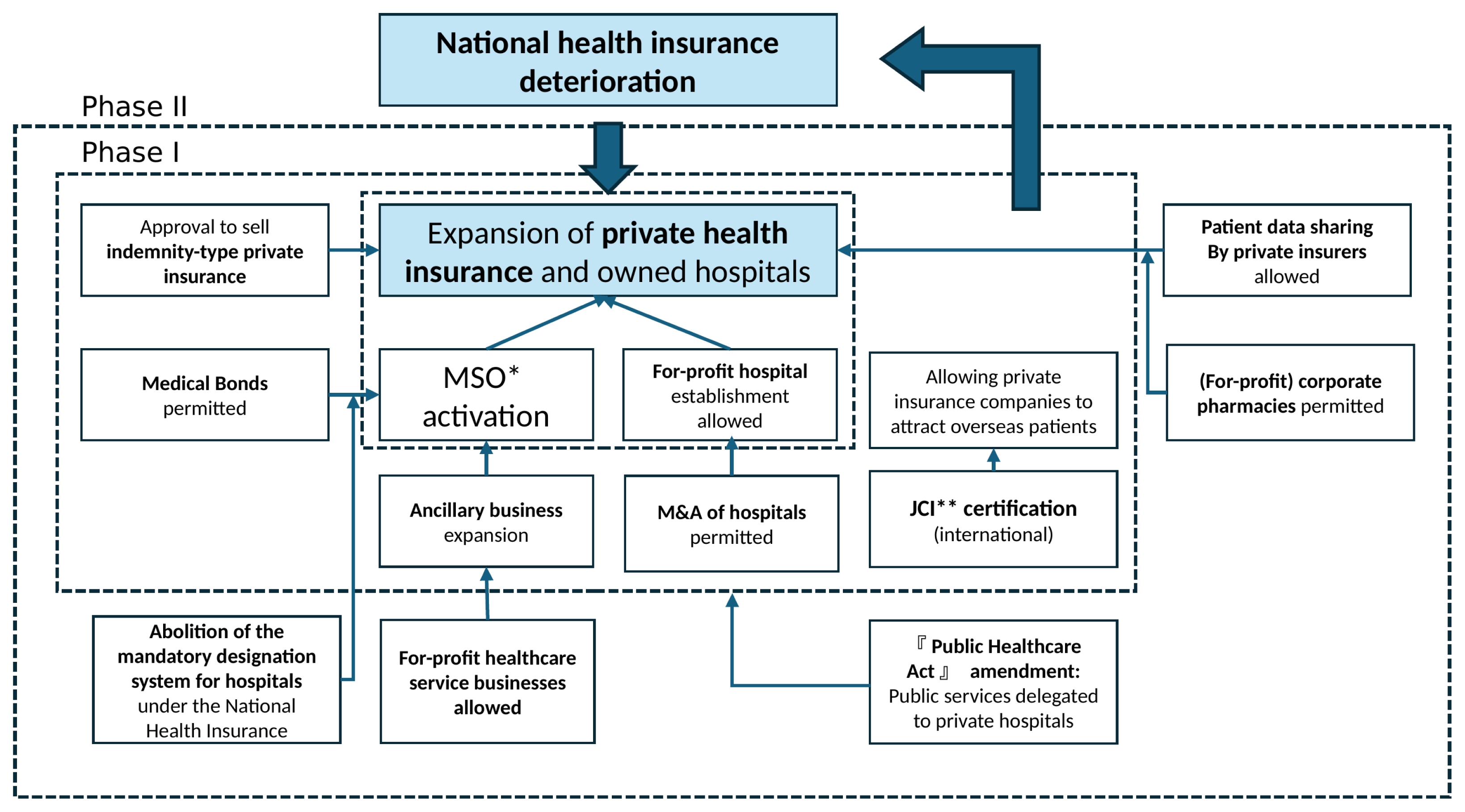
Shin, 2010b), and from the early 2000s, the government began to officially advocate for and implement healthcare privatization policies, setting the creation of national wealth as the goal of the healthcare system. Once “Pandora’s box” was opened, a flood of policies promoting the commercialization of healthcare began to emerge. Various healthcare privatization policies ultimately benefit the aforementioned conglomerates, the private insurance companies they own, and the biotech industry (
Figure 2).
Throughout this process, progressive civic, labor, and social movement organizations have worked to prevent the privatization of healthcare and strengthen the public nature of the healthcare system. As a result, while they have had some success in blocking or delaying certain government healthcare policies designed to maximize profits, they have not achieved significant progress in dramatically expanding the public share of total healthcare costs or the public healthcare infrastructure (
Table 1).
South Korea’s healthcare system is once again facing three serious new crises.
The relentless push toward the privatization and commercialization of healthcare
Despite the struggles of citizens, labor, and civil society to block the privatization of healthcare and strengthen its public nature, the dominant political and economic structures, institutions, and culture that have operated in South Korean society for over 100 years—along with the still-rampant neoliberalism—are hindering a meaningful transition toward a society that prioritizes democratic public interest. This pattern is being replicated exactly in the healthcare sector. Even during the relatively progressive Moon Jae-in administration, laws allowing the commercial use of personal information were enacted and passed despite opposition from civil society. Even the current government, which came to power after preventing the declaration of an illegal martial law in December 2024 (
Constitutional Court of Korea, 2025) through widespread citizen resistance, continues to push forward various policies supporting the for-profit medical industry, such as telemedicine systems that permit the use of patient information for commercial purposes and policies that remove or simplify safety measures in the new drug development process at the request of pharmaceutical companies.
On December 23, 2024, the South Korean government announced that South Korea had entered a “super-aged society,” as the registered population aged 65 and older reached 10,244,550, accounting for 20.0% of the total registered population. The proportion of people aged 65 and older in the total population was only 2.9% in 1960, but it is projected to reach 47.7% by 2072 (
Statistics Korea, 2023). While this rapid aging is partly due to increased life expectancy, it is primarily driven by the world’s lowest fertility rate of 0.75 (2024).
South Korea’s aging population is occurring at a rate unprecedented in human history, causing rapid changes across all political, social, and economic sectors. Healthcare is one of the areas most significantly affected. Specifically, medical expenses for people aged 65 and older account for approximately 45% of total healthcare costs and continue to rise. Consequently, this is leading to a rapid rise in healthcare costs. South Korea’s per capita current healthcare expenditure (PPP) has increased by an average of 7.8% annually over the past decade (2013–2023), significantly exceeding the OECD average growth rate (5.2%) for the same period. Furthermore, due to low birth rates and an aging population, the old-age dependency ratio is projected to rise from the current 27.4 (2024) to approximately 79 in 2050 and 104.2 in 2072, reaching the highest level among OECD countries (
Statistics Korea, 2023). This is highly likely to lead to a financial crisis in South Korea’s health insurance system, which relies primarily on contributions from the working-age population. In fact, the National Health Insurance Service’s financial reserves (accumulated reserves) are rapidly dwindling and are projected to be depleted by 2028–2033 (
Lim, 2024;
Ministry of Economy and Finance, 2025).
It is by no means a recent development that science and technology have begun to exert a decisive influence on the lives of a society and, indeed, of humanity as a whole. While there is an emphasis on evidence-based policy, the research needed to generate such evidence—particularly that targeting vulnerable groups—is limited; as a result, the very basis for policy implementation has long been co-opted by political power. It has long been a serious problem that the allocation of research funds, systems, and policies operates in favor of the ruling class, leaving research needed by social movements or civil society “left unfunded, incomplete, or generally ignored”— a phenomenon known as “undone science” (
Hess, 2015). Furthermore, as science and technology have become “big science” with the support of political power and big capital (
Hiltzik, 2015), civil society—with its relatively limited capital, human resources, and technology—is becoming increasingly marginalized in science-related policy.
The same applies to the healthcare sector; despite some positive outlooks, it is expected to give rise to issues such as “digital health discrimination” against certain groups (
Char et al., 2018), as well as data privacy violations and commercial misuse (
Vayena et al., 2018). According to the Stanford AI Index 2026 and other sources, South Korea currently ranks third globally in producing “notable AI models” with eight, trailing only the United States (59) and China (35), and surpassing traditional tech powerhouses such as the United Kingdom and France (
Stanford HAI, 2026). Consequently, it is poised to become one of the countries where political phenomena related to artificial intelligence will emerge most rapidly and actively.
These three crises are not isolated but are closely intertwined. Above all, given that these three heads share a single body, the crisis currently facing the South Korean healthcare system resembles Cerberus, the three-headed monster from Greek mythology.
Conclusion: Focusing on Policy Implications
The characteristics of South Korea’s healthcare system— namely, a low public share in total medical expenditure and a private-sector-dominated healthcare delivery system —are the result of a long historical process. The evolution of the Korean healthcare system empirically demonstrates that these characteristics emerged within the context of international political and economic forces, including World War II, the post-war era, the Cold War, and the global expansion of neoliberalism, and that they are significantly influenced by the nature of the dominant political and economic powers. However, the formation of these characteristics was not the result of the sole power of the ruling class, but rather a process of co-evolution shaped in conjunction with countervailing forces that advocated for independence, democratization, and the strengthening of the public sector.
In a healthcare system where the proportion of public contribution to total medical expenses is low and the provision of medical services relies primarily on the private sector, can South Korea transition to a system of greater public contribution and public provision by having a powerful civic and labor society, striving for the public nature of healthcare, overwhelm profit-seeking large capital and the government and political forces supporting it, and by dramatically expanding public investment in the healthcare sector? Furthermore, what results will Korean society produce amidst the new crisis currently facing its healthcare system? What is clear is that, as history over the past century demonstrates, the outcome will also be determined by the multilayered political dynamics of dominant and opposing forces at global, national, and collective levels. The history of the co-evolution of politics and the healthcare system created by Korean society will provide useful insights for not only Korea but also other countries facing similar situations to build better healthcare systems.
Notes
Figure 1
The ratio of public healthcare expenditure to total healthcare costs and the ratio of public hospital beds in OECD countries
Source: The author created this figure using publicly available data from the OECD (2022–2023). Figures for some countries for which no OECD data is available are based on information provided by those countries.
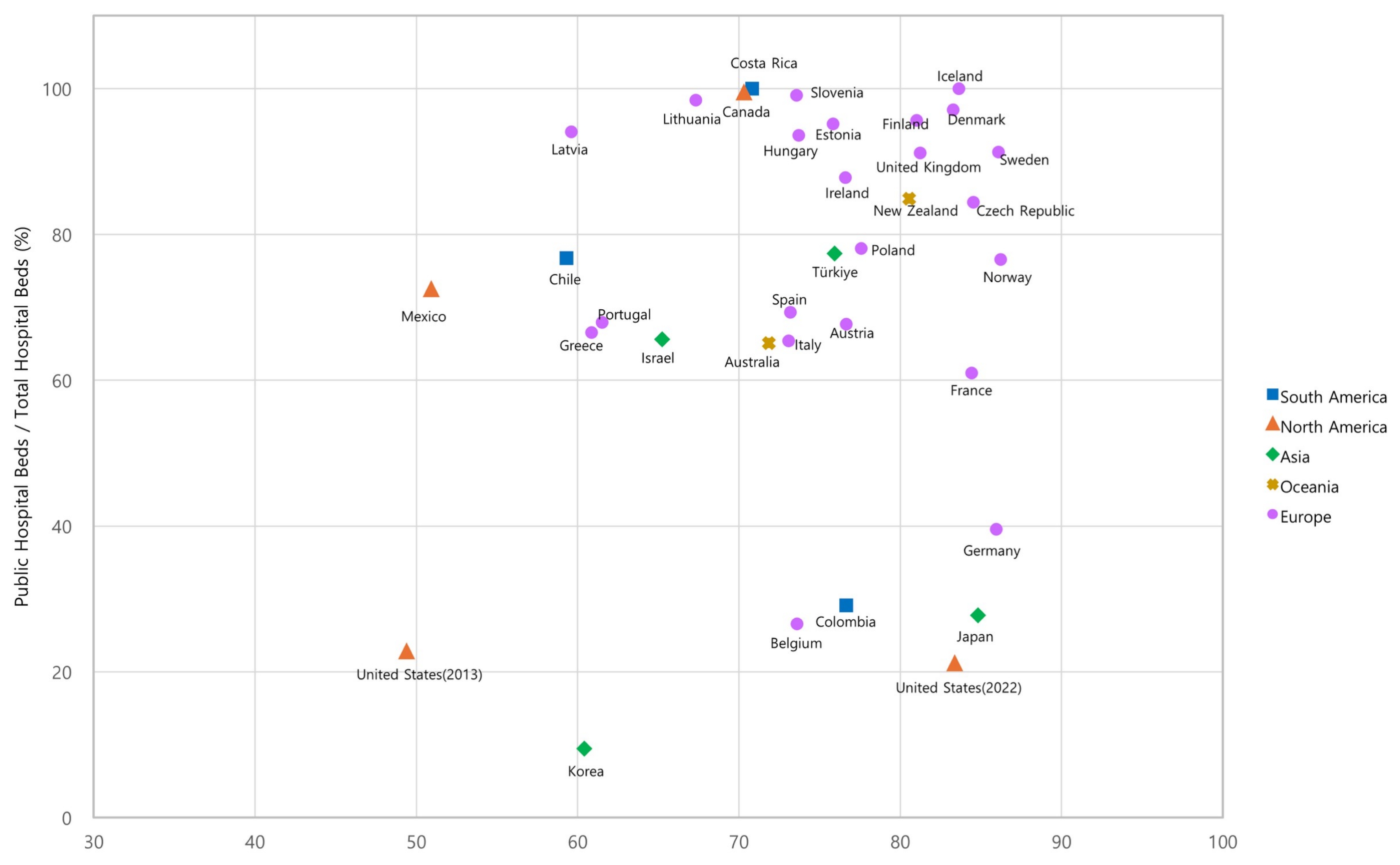
Figure 2
Major medical privatization policies in South Korea
Source: Author. *MSO: Medical Service Organization; **JCI: Joint Commission International.
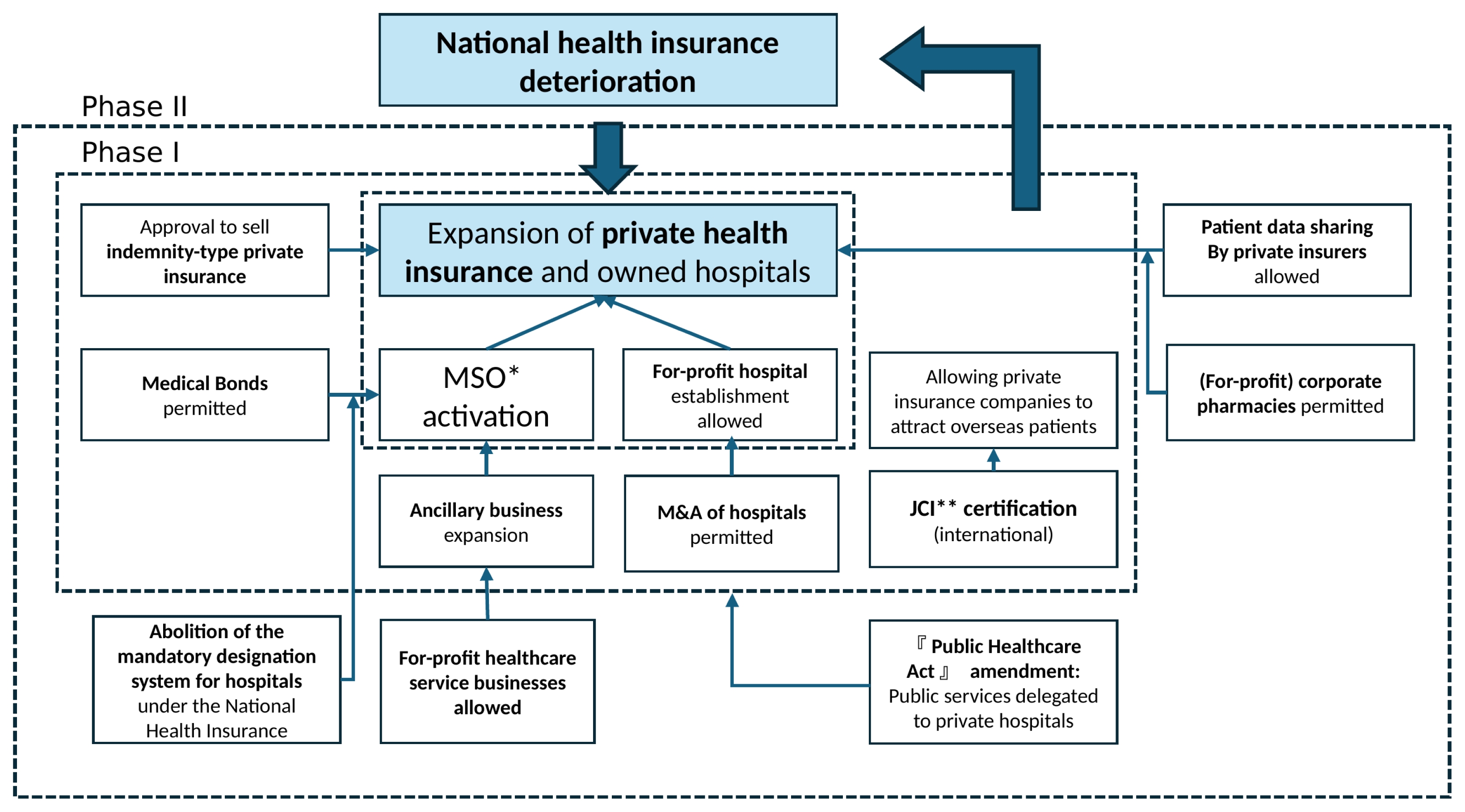
Table 1Summary of the co-evolution of Korean politics and the healthcare system by period
Table 1
|
Period |
Major policy context |
Major political actors |
|
Global |
National |
Collective |
|
1910–1945 |
Colonial rule |
Great powers pursuing colonial imperialism |
The Japanese Empire |
Korean workers |
|
1945–1996 |
Liberation; Korean War; military regime; economic-priority policy; deferral of welfare |
The United States and the Soviet Union under the Cold War |
Korea’s military regime armed with anti-communism and economic-priority policy |
South Korea’s labor movement and pro-democracy movement forces |
|
1997–Present |
Democratization; IMF economic crisis; global neoliberalism |
The IMF and other institutions under global neoliberalism |
Government and chaebols |
Civil–labor society; progressive healthcare and welfare experts |
References
- Bae, G., Kang, M., & Reich, M. R. (2024). The Consolidation of Risk Pools in the National Health Insurance Program of the Republic of Korea: Analysis of the Political Processes. Health Systems & Reform, 10(1), 2375101. https://doi.org/10.1080/23288604.2024.2375101
- Char, D. S., Shah, N. H., & Magnus, D. (2018). Implementing Machine Learning in Health Care—Addressing Ethical Challenges. The New England Journal of Medicine, 378(11), 981. https://doi.org/10.1056/NEJMp1714229
- Choi, J. (1996). A History of Korean-American Medicine: Reflections on 60 Years as a Physician. Younglim Cardinal.
- Constitutional Court of Korea (2025). Decision on the Impeachment of the President (Yoon Suk Yeol), 2024Hun-Na8. Constitutional Court of Korea. https://www.law.go.kr/LSW/detcInfoP.do?detcSeq=197519
- Eda, I. (2004). Manchuria Medical University and “Frontier Public Health”. Mita Gakkai Zasshi, 92(2), 12. https://koara.lib.keio.ac.jp/xoonips/modules/xoonips/detail.php?koara_id=AN00234610-20040701-0109
- Field, M. G. (1973). The Concept of the “Health System” at the Macrosociological Level. Social Science & Medicine (1967), 7(10), 763–785. https://doi.org/10.1016/0037-7856(73)90118-2
- Hess, D. J. (2015). Undone Science, Industrial Innovation, and Social Movements. The Routledge International Handbook of Ignorance Studies. (pp. 141154). Routledge.
- Hiltzik, M. (2015). The Origins of Big Science: And What Comes Next. Boom, 5(3), 98–108. https://doi.org/10.1525/boom.2015.5.3.98
- Jung, I., & Shin, Y. (2016). The Establishment of Wonsan Laborers’ Hospital during the Japanese Occupation and Its Significance. Korean Journal of Medical History, 25(3), 445. https://doi.org/10.13081/kjmh.2016.25.445
- Kwon, S., & Reich, M. R. (2005). The Changing Process and Politics of Health Policy in Korea. Journal of Health Politics, Policy and Law, 30(6), 1003–1026. https://doi.org/10.1215/03616878-30-6-1003
- Lee, J. (2003). Health Care Reform in South Korea: Success or Failure?. American Journal of Public Health, 93(1), 48–51.
- Lee, Y., Seo, E., & Lee, T.-j.L. (2023). Catastrophic Health Expenditure and Impoverishing Health Spending Analysis Using Korean National Health Insurance Service Data. The Korean Journal of Health Economics and Policy, 29, 31. https://www.dbpia.co.kr/journal/articleDetail?nodeId=NODE11591285
- Lim, S.-g. (2024). Health Insurance Financial Outlook Reflecting Healthcare Reform and Emergency Medical Care Measures [Technical Report]. https://share.google/uvHEp4r0CRPJbM0Ng
- Ministry of Economy and Finance. (2025). Implementation of the 3rd Long-term Fiscal Outlook 2025–2065[Technical Report]. https://eiec.kdi.re.kr/policy/materialView.do?num=270579
- Navarro, V., Muntaner, C., Borrell, C., Benach, J., Quiroga, Á, Rodríguez-Sanz, M., Vergés, N., & Pasarín, M. I. (2006). Politics and Health Outcomes. The Lancet, 368(9540), 1033–1037. https://doi.org/10.1016/S0140-6736(06)69341-0
- Park, J. (2020). Health, Capitalism, and Medical Privatization in the Historical Context. History Critique, 25, https://doi.org/10.38080/crh.2020.02.130.284
- Shin, Y. (2010a). The Historical Context and Policy Implications of Health Care Privatization Policy and Social Response in South Korea. Situation and Welfare (Sanghwang-Gwa Bogji), 29, 45. https://www.earticle.net/Article/A118678
- Shin, Y. (2010b). The History of the Struggle for Universal Health Insurance. Monthly Welfare Trends (Bogjidonghyang), 141, 4. https://www.dbpia.co.kr/journal/articleDetail?nodeId=NODE01481251
- Stanford, H. A. I. (2026). The 2026 AI Index Report [Technical report]. https://hai.stanford.edu/ai-index/2026-ai-index-report
- Statistics Korea (2023). Population Projections: 2022–2072 [Technical Report]. https://kosis.kr/statHtml/statHtml.do?orgId=101&tblId=DT_1BPA002
- Vayena, E., Blasimme, A., & Cohen, I. G. (2018). Machine Learning in Medicine: Addressing Ethical Challenges. Plos Medicine, 15(11), e1002689. https://doi.org/10.1371/journal.pmed.1002689
- Woo, K., Park, C., & Shin, Y. (2018). The Effect of Catastrophic Health Expenditure on the Transition to Poverty: The Mediating Effect of Financial Coping. The Korean Journal of Health Economics and Policy, 24(2), 33. https://www.kci.go.kr/kciportal/ci/sereArticleSearch/ciSereArtiView.kci?sereArticleSearchBean.artiId=ART002363627
- World Bank (2026). Life Expectancy at Birth, Total (Years) — Korea, Rep. [Data Set]. World Bank Data. https://data.worldbank.org/indicator/SP.DYN.LE00.IN?locations=KR
- Yang, B. (1991). Health Insurance in Korea: Opportunities and Challenges. Health Policy and Planning, 6(2), 119–129. https://doi.org/10.1093/heapol/6.2.119